Showing posts with label postmodernism. Show all posts

Saturday, October 4, 2025

Jameson's Cultural Logic of Late Capitalism: Postmodernism and the Depthless Present

By the late 1980s, Fredric Jameson’s attention shifted from the nineteenth-century novel and modernist experimentation to the cultural condition of his own time. In his landmark book Postmodernism, or the Cultural Logic of Late Capitalism (1991), Jameson proposed that postmodernism was not just another artistic style but the dominant cultural logic of an entire historical era. Modernism, he argued, had been the culture of an industrial world still haunted by depth—by alienation, authenticity, and the struggle for meaning. Postmodernism, by contrast, belongs to a global, computerized, and consumerist age in which history has flattened into spectacle and subjectivity dissolves into surface.


The World of Late Capitalism

Jameson borrowed the term late capitalism from the Marxist economist Ernest Mandel to describe the third and current stage of capitalist development: a world of multinational corporations, global markets, and digital technologies. In such a system, culture no longer stands apart from the economy; it becomes one of its central industries. Advertising, entertainment, and design are now integral to production itself. The old distinction between base and superstructure collapses. Everything — identity, politics, art — is commodified. Postmodernism, therefore, is not a rebellion against capitalism but its purest expression: the aesthetic of a system that has absorbed all opposition and turned it into style.


Pastiche and the Loss of Depth

One of Jameson’s most famous insights is his distinction between parody and pastiche. Parody, he explains, presupposes a sense of norm and deviation; it mocks its model through irony. Pastiche, on the other hand, is “blank parody”: imitation without satire, reproduction without memory. In postmodern culture, where history is consumed as nostalgia and originality is replaced by remix, pastiche becomes the dominant mode. Think of retro fashion, sampled music, or films that endlessly reference older films — these are symptoms of a culture that can only recycle the past because it has lost faith in the possibility of newness.


The Death of Affect and the End of History

In this postmodern condition, even emotion becomes stylized. Jameson speaks of the waning of affect: the replacement of genuine feeling with aestheticized mood. Everything feels like a quotation. The individual subject, once the moral center of modernism, fragments into a dispersed consumer identity, defined by taste rather than conviction. The result is what he calls the “cultural logic of late capitalism” — a system that produces infinite images but no depth, infinite choice but no meaning in what he calls depthlessness.


Cognitive Mapping as a Political Response

Yet Jameson does not merely lament this condition. He insists that the disorientation of postmodern life — its fragmented spaces and dizzying global flows — demands new representational strategies. His concept of cognitive mapping proposes that art and theory should help us orient ourselves within the totality of global capitalism, to regain a sense of collective position and historical direction. Postmodernism may signify the exhaustion of certain forms, but it also challenges us to invent new ones: ways of imagining the world system as a whole, and of reclaiming the power to act within it.

In this sense, Postmodernism is both diagnosis and call to arms. Jameson’s cultural theory reveals how deeply capitalism penetrates our imaginations — but also reminds us that critique itself can become a form of resistance, a first attempt to map the world again.


Learn more:

Tuesday, February 18, 2025

The Limits of Interpretation: Geertz vs. Poststructuralism

Clifford Geertz’s interpretive anthropology, grounded in the concept of thick description, revolutionized the study of culture by emphasizing meaning, symbols, and context over rigid structural laws. His work positioned anthropology closer to the humanities, particularly hermeneutics and literary analysis. However, poststructuralist thinkers, particularly Jacques Derrida, Michel Foucault, and Gayatri Chakravorty Spivak, have raised significant challenges to Geertz’s approach. These critiques focus on the assumptions underlying interpretation, the stability of meaning, and the politics of representation. This article explores how Geertz’s methodology both aligns with and is problematized by poststructuralist thought.


Geertz’s Interpretive Anthropology: The Search for Meaning

Geertz’s anthropology is built on the premise that culture is a system of symbols, much like a text, that must be interpreted rather than explained in a scientific sense. In works like The Interpretation of Cultures (1973), he argues that human action is embedded in a web of significance, and the task of the anthropologist is to decipher these meanings in a manner akin to literary analysis. His reliance on hermeneutics places him in opposition to structuralist approaches like those of Claude Lévi-Strauss, which sought universal cognitive structures beneath cultural variation.

For Geertz, meaning is relatively stable and recoverable through close ethnographic engagement. He famously described ethnography as “thick description”—a process of layering interpretations to arrive at a nuanced understanding of cultural practices. His most celebrated example, Deep Play: Notes on the Balinese Cockfight, demonstrates how an ostensibly simple activity operates as a complex system of social meaning. In this sense, Geertz assumes that symbols, while context-dependent, have decipherable meanings that can be reconstructed through rigorous ethnographic work.


Derrida and the Instability of Meaning

One of the most fundamental poststructuralist challenges to Geertz comes from Jacques Derrida’s notion of différance—the idea that meaning is never fully present but is always deferred through an endless chain of signifiers. While Geertz treats cultural symbols as texts that can be read for meaning, Derrida dismantles the idea that any text (including culture) has a singular, stable meaning to be uncovered.

Derrida’s deconstruction problematizes Geertz’s assumption that the anthropologist can reliably extract cultural meaning. If meaning is never fixed, if interpretation is always contingent and deferred, then the notion of a definitive thick description becomes suspect. What Geertz views as a rigorous ethnographic reading, Derrida might see as a momentary stabilization of meaning—one that ignores the fluidity and indeterminacy inherent in any act of interpretation.


Foucault and the Power of Interpretation

Michel Foucault further challenges Geertz by shifting the focus from meaning to power. While Geertz assumes that culture operates through symbols that can be understood through deep interpretation, Foucault sees discourse as fundamentally shaped by power relations. His work suggests that what counts as “meaning” is not simply there to be uncovered but is produced through historical and institutional frameworks.

From a Foucauldian perspective, Geertz’s ethnography risks reinforcing dominant interpretations rather than exposing the structures that shape meaning. Who gets to define what a symbol means? Whose interpretations become authoritative? By prioritizing the anthropologist’s interpretation, Geertz’s methodology could be critiqued as an exercise of epistemic power, where the researcher—often a Western scholar—claims to reveal the “true” meaning of cultural practices.


Spivak and the Politics of Representation

Gayatri Chakravorty Spivak’s critique of representation adds another layer of complexity to Geertz’s approach. In her seminal essay Can the Subaltern Speak?, Spivak questions whether marginalized groups can ever truly represent themselves or if their voices are always mediated by intellectual elites. This critique is particularly relevant to Geertz, whose ethnographic work often speaks for the cultures he studies rather than allowing them to speak for themselves.

Spivak’s critique suggests that Geertz’s method, despite its attentiveness to meaning, may still impose a dominant interpretive framework on the societies he studies. His portrayal of Balinese cockfighting, for instance, may reflect more of his own academic lens than the lived perspectives of Balinese participants. This raises ethical questions: Does thick description truly capture the voice of the cultural subject, or does it inevitably reshape it through the anthropologist’s interpretive authority?


Geertz’s Defense: Between Objectivity and Relativism

Despite these critiques, Geertz’s approach offers a pragmatic alternative to both positivist objectivity and poststructuralist relativism. He acknowledges the partiality of interpretation but resists the extreme skepticism of poststructuralists who claim that meaning is wholly unstable or that power determines all knowledge.

Geertz’s response to such critiques can be found in his later works, where he emphasizes the situated nature of interpretation. He does not claim to produce definitive readings of culture but rather to provide interpretations that are contextually grounded and open to revision. In this way, his work can be seen as a middle path—acknowledging the instability of meaning without surrendering to radical indeterminacy.


An Unfinished Debate

The tensions between Geertz and poststructuralist thought remain unresolved, reflecting deeper philosophical questions about interpretation, meaning, and power. While Geertz offers a compelling method for understanding culture, poststructuralist critiques reveal its limitations, particularly in its assumptions about meaning’s stability and the role of power in shaping interpretation. Yet, Geertz’s legacy endures precisely because he confronted these complexities head-on, offering an interpretive framework that, while imperfect, continues to inspire debate in anthropology, literary studies, and cultural theory.


See also: Clifford Geertz and the Interpretive Theory of Culture: Understanding Meaning in Human Societies


Wednesday, May 10, 2023

Fredric Jameson – Postmodernism or the Cultural Logic of Late Capitalism –summary and review

Fredric Jameson is regarded as one of the most significant and influential literary and cultural critics and theorists in the English-speaking Marxist tradition. In "Postmodernism or the Cultural Logic of Late Capitalism", Jameson aims to define the nature of cultural production in the late capitalism era of the second half of the 20th century, distinguishing it from other forms of cultural production from earlier capitalist eras.

A significant part of "Postmodernism or the Cultural Logic of Late Capitalism" focuses on differentiating works of art and architecture from what Jameson calls "high modernism" and postmodern works. He describes the postmodern mode of production as a "cultural dominant," highlighting concepts such as "depthlessness" or the suppression of depth, the waning of affect, and pastiche, which Jameson believes relate to the postmodern form of production and experience.


The Problem of Periodization and the Cultural Dominant

The term postmodernism brings forth the issue of periodization, necessitated by the prefix "post-" assigned to modernism. Jameson believes it's possible to discuss cultural modes within a defined timeline, but limits his periodization of postmodernism to the flexible concept of a cultural dominant, which allows for other forms of cultural production to coexist alongside it.

Jameson, adhering to the Marxist tradition, links culture with the political and economic state of society, asserting that a society's socio-economic structure is reflected in its cultural forms. He relies on Ernest Mandel's work that divides capitalism into three distinct periods, each aligning with a stage of technological development: steam engines in the mid-19th century, electricity and internal combustion engines in the late 19th century, and electronic and nuclear devices since the 1940s. These developments correspond with three stages of capitalism: the national market economy stage, the imperialistic monopoly stage, and the current phase of late capitalism. Jameson then aligns these stages of capitalism with three stages of cultural production: realism, modernism, and present-day postmodernism.

Jameson views postmodernism as a cultural form that evolved from the socio-economic order of current capitalism. It is not a universal trend, but a cultural dominant influencing all cultural productions. This perspective accommodates other cultural modes of production while still treating our time as postmodern. Although non-postmodern art, literature, and architecture are still produced, postmodernism is the dominant cultural force.

The remainder of "Postmodernism or the Cultural Logic of Late Capitalism" is devoted to supporting this claim by examining various cultural products and further developing theoretical issues.


Fredric Jameson - Postmodernism or the Cultural Logic of Late Capitalism - summary 
part 1 - 2 - 3 - 4 - 5 - Review

Monday, May 1, 2023

Summary: Fredric Jameson / Postomodernism: Pastiche and pop history


Fredric Jameson - Postmodernism or the Cultural Logic of Late Capitalism - summary 
part 1 - 2 - 3 - 4 - 5 - Review


Fredric Jameson suggests that pastiche is a key characteristic of cultural production in the age of postmodernism. In modern times, the existence of an autonomous subject was crucial for artistic and cultural production. This allowed the artist, as a subject, to address their consumer as a subject, thereby influencing them. However, with the decline of effect, the artist's unique individuality, once a foundational principle, has been minimized to a neutral and objectifying form of communication in the postmodern age.

With the fragmentation of subjectivity, it's unclear what postmodern artists and authors should do besides referencing the past and imitating expired styles. This approach, which Jameson calls pastiche, is an "empty parody" devoid of profound or hidden meanings.

Pastiche, like parody, imitates a unique style but lacks the intent and substance of parody, having neither satirical impulse nor a "yin" revealed by the "yang". The postmodern artist resorts to pastiche because they can't create new aesthetic forms, only replicate old ones without generating new meanings.

Pastiche results in what architectural history terms "historicism", which Jameson describes as a random cannibalization of past styles. This cannibalism, or pastiche, is evident across all areas of cultural production but is most pronounced in global American television and Hollywood culture.

When the past is portrayed through pastiche, it results in a "loss of historicity". The past is depicted as a shimmering illusion, a form of postmodern history Jameson labels as "pop history". This is history based on the pop images produced by commercial culture. Nostalgic or retro films and books, which seemingly provide historical accounts, are actually manifestations of this pastiche pop history. They apply our own superficial stereotypes to times no longer accessible to us.

Jameson extensively discusses E.L. Doctorow's "Ragtime" as a postmodern novel and references George Lucas's "American Graffiti" as a movie attempting to capture a lost reality in U.S. history.

According to Jameson, pastiche is the only mode of cultural production permitted by postmodernism.


Fredric Jameson - Postmodernism or the Cultural Logic of Late Capitalism - summary 
part 1 - 2 - 3 - 4 - 5 - Review

Thursday, October 13, 2022

Simulacra and Simulation by Jean Baudrillard – summary

"...The simulacrum is never that which conceals the truth—it is the truth which conceals that there is none. The simulacrum is true" (Baudrillard, "Simulacra and Simulation")

The concept of Simulacra, or Simulacrum, was not invented by Jean Baudrillard, and it was a recurring concept in French philosophical thought, such as that of Deleuze, before the publication of Baudrillard's "Simulacra and Simulation" in 1981. In its lexical ordering, simulacra refers to a material image that appears as something else without having the features or essence of that something. This is reminiscent of Plato's objection to representations that come to replace the "real" and from which we lose access.

In "Simulacra and Simulation", Baudrillard poses the question of what happens in a world that is ultimately denied all access to the real, where only simulacra and simulation exist. For Baudrillard, this is indeed the world in which we live. Simulations take over our relationship with real life, creating a hyperreality that is a copy without an original. This hyperreality occurs when the distinction between reality and representation collapses, and we can no longer see an image as reflecting anything other than a symbolic exchange of signifiers in culture, rather than the real world.

In the chapter "Precession of Simulacra", Baudrillard describes three orders of simulacra. The first order is one in which reality is represented by the image (the map represents the territory). The second order of simulacra is one in which the distinction between reality and representation becomes blurred. The third order of simulacra is that of simulation, which replaces the relationship between reality and representation. In this order, reality itself is lost in favor of a hyperreality.

Baudrillard famously gives the examples of Disneyland and Watergate to demonstrate the function of the third order of simulacra and the production of a hyperreality that leads us to believe that we can distinguish reality from representation, the real from the imaginary, and the copy from its original.


Thursday, November 16, 2017

Structuralism and Poststructuralism in literary theory


Structuralism was a broad movement which attempted to locate the operative principles which ground activities and behaviours; its importance to Literary Theory is substantial, although Literary Theory has rejected a number of its premises. Two central structural theories were Freud's psychoanalytic theory and Marx's economic/political theories. What marks these theories as structuralist is their locating of generative forces below or behind phenomenal reality, forces which act according to general laws through transformative processes. In structural theories, motive, or generative force, is found not in a pre-text but in a sub-text; the surface is a transformation, a re-coded articulation of motive forces and conditions, and so the surface must be translated rather then simply read. From the rise of the whole rich field of semiotics to the theorizing of the history of science to the revolutionizing of anthropology to the creation of family therapy, structuralism has been a central, pervasive force in the century. The idea of decoding the depth from the manifestations of the surface, that what appears is often masking or is a transformation of what is, is a key tenant of Literary Theory.

Poststructuralism carries on with the idea of the surface as a transformation of hidden forces, but rejects structuralism's sense that there are timeless rules which govern transformations and which point to some stable reality below and governing the flux — what poststructuralism refers to as an essentialist or totalizing view. Poststructuralism sees 'reality' as being much more fragmented, diverse, tenuous and culture-specific than does structuralism. Some consequences have been, first, poststructuralism's greater attention to specific histories, to the details and local contextualizations of concrete instances; second, a greater emphasis on the body, the actual insertion of the human into the texture of time and history; third, a greater attention to the specifies of cultural working, to the arenas of discourse and cultural practice; lastly, a greater attention to the role of language and textuality in our construction of reality and identity. Literary Theory is a poststructural practice.  

Sunday, January 15, 2017

Fredric Jameson / Postmodernism: high culture and popular culture – the case of Bonaventure hotel

Fredric Jameson - Postmodernism or the Cultural Logic of Late Capitalism - summary part
 1 - 2 - 3 - 4 - 5


Depthlessness, pastiche, the fragmentation of the subject and other characteristics of postmodern culture introduced by Fredric Jameson (see previous parts of the summary) strongly question the notion of "high culture" as opposed to popular culture. Jameson notes how boundaries between high and low culture have been transgressed in postmodern times with kitsch and popular culture integrating with forms of high culture to produce one big varied consumer culture.

Jameson argues that not only is postmodernism a cultural dominant (i.e. the dominant form of cultural production) but that it has turned into a prime consumer product, with the aesthetic production being integrated into the general production of consumer goods. The growing need to produce ever newer products now allocates an essential structural position to aesthetic novelty.

Jameson notes to the aesthetic field which has the strongest ties with the economical system is that of architecture which has strong ties with real-estate and development which give rise to a tide of postmodern architecture, epitomized in the grandeur of shopping malls.   

Jameson famously analyzes the postmodern features of the L.A. Westin Bonaventure hotel. His main argument concerning the Bonaventure hotel is that this building, as other postmodern architecture, does not attempt to blend into its surroundings but to replace them. The Bonaventure hotel attempts to be a total space, a whole world which introduces a new form of collective behavior. Jameson sees the total space of the Bonaventure hotel as an allegory of the new hyper-space of global market which is dominated by the corporations of late capitalism.
It seems that in Postmodernism Jameson often laments the shortcomings of postmodern culture, though there is also a sense of inevitability in his writing. Postmodernism according to Jameson is an historical situation, and therefore it will be wrong to assess it in terms of moral judgments. Jameson proposes to treat postmodernism in line with Marx's thought which asks us to "do the impossible" of seeing something as negative and positive at the same time, accepting something without surrendering judgment and allowing ourselves to grasp this new historical form. 

Fredric Jameson - Postmodernism or the Cultural Logic of Late Capitalism - summary part
 1 - 2 - 3 - 4 - 5


additional resources:


Saturday, May 14, 2011

Review: Fredric Jameson/ postmodernism - Part 2: the cultural dominant

part 1 - 2 - summary


Fredric Jameson's interpretative principles in "Postmodernism or the Cultural Logic of Late Capitalism" hold that one cannot interpret art of any cultural text by appealing to the artist himself and by assuming creative freedom, and that certain preconditions, historical, political and economical ones have to be identified beforehand. In this he holds true to the Marxist tradition of "totality" (material and historical) as a principle source of explanation for all individual phenomenon. A given cultural product is always the product of temporal conditions, which have their own "cultural dominant" that although, as Jameson notes, is not deterministic or all-encompassing, it is still nevertheless unavoidable. This stance expressed in the concept of "cultural dominant" helps Jameson to soften the crude Hegelian and Marxist dialectics.

The current (1991) cultural dominant, Jameson says, is postmodernism. Jameson's arguments such as the rise of pastiche, the waning of affect, depthlessness and others expressed in "Postmodernism" all have to do with the current mechanisms of representation and experience in culture, and they all interact with the historical, economical, political and aesthetical form of postmodernism. In this Jameson is of course true to the Marxist tradition such as the thinking of Lukács in relating the historical totality with its different manifestations. After all, for Jameson, postmodernism is still in accord with the Marxist historical narrative.

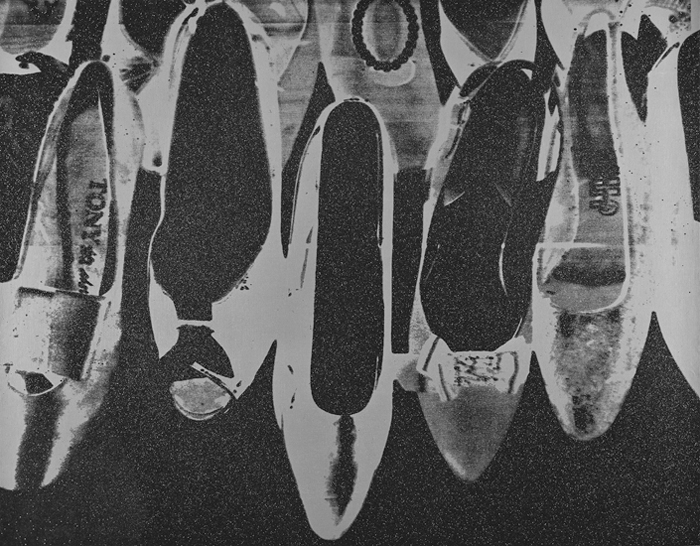
Jameson's selection of examples, such as E.L.Doctorow's "Ragtime", Warhol's "Diamond Dust Shoes" or the Westin Bonaventure hotel all come from the American culture which is for Jameson the source of postmodernism.

It is hard to determine whether Jameson is a "fan" of postmodernism or not. There is of course of a tone of lamentation throughout "Postmodernism or the Cultural Logic of Late Capitalism" but Jameson does not call for a negative stance towards postmodernism not does he wishes to undo its cultural dominance. It seems that for Jameson postmodernism, as an historical imperative, a product of the material dialectical history, and we just have to deal with it.

part 1 - 2 - summary


Review: Fredric Jameson – Postmodernism or the Cultural Logic of Late Capitalism

part 1 - 2summary


Fredric Jameson's premise in his widely acclaimed "Postmodernism or the Cultural Logic of Late Capitalism" is that the Marxist meta-narrative can sustain a reliable account of all cultural texts produced by a given society. He therefore combines the theories of Marxist thinkers such as Lukács and Althusser with some post-structuralist thinking in order to create a complex method of interpreting cultural texts such a literature and architecture. As previous 20th century modern thinkers such as the Frankfurt School he is also critical of the dogmatic and deterministic "crude" Marxist point of view which is refined in ""Postmodernism or the Cultural Logic of Late Capitalism".  Following Althusser and his affiliation with Lacan he adopts dome psychoanalytic notions along with the hermeneutic principle of overdetermination in order to provide a rich and complex stance for diagnosing ideological symptoms in cultural products.

Jameson's pursuit of the question of postmodernism in "Postmodernism or the Cultural Logic of Late Capitalism" can be seen as a direct development on his views in "The Political Unconscious" and "Postmodernism and Consumer society".

Jameson directly deals with the question of periodization, which in the Marxist context is directly related to the question of determinism. He relies on Ernest Mandel's work which offered an historical periodization on the basis of technological developments. He offers three stages of development in capitalism and it is interesting to ask whether the current "age of information", not yet dominant at the time of "Postmodernism or the Cultural Logic of Late Capitalism", is a new fourth phase or the continuation of the third stage, the "post-industrial" or "multi-national", assigned by Mandel and adopted by Jameson. With everybody announcing the "postmodernism is dead" nowadays, it is also interesting to ask what is the current "cultural dominant" which in Jameson's time was postmodernism (perhaps neo-modernism, but who knows?).

part 1 - 2 - summary


Wednesday, May 11, 2011

Fredric Jameson / Postmodernism: high culture and popular culture – the case of Bonaventure hotel

Fredric Jameson - Postmodernism or the Cultural Logic of Late Capitalism - summary part
 1 - 2 - 3 - 4 - 5 - Review


Depthlessness, pastiche, the fragmentation of the subject and other characteristics of postmodern culture introduced by Fredric Jameson (see previous parts of the summary) strongly question the notion of "high culture" as opposed to popular culture. Jameson notes how boundaries between high and low culture have been transgressed in postmodern times with kitsch and popular culture integrating with forms of high culture to produce one big varied consumer culture.

Jameson argues that not only is postmodernism a cultural dominant (i.e. the dominant form of cultural production) but that it has turned into a prime consumer product, with the aesthetic production being integrated into the general production of consumer goods. The growing need to produce ever newer products now allocates an essential structural position to aesthetic novelty.

Jameson notes to the aesthetic field which has the strongest ties with the economical system is that of architecture which has strong ties with real-estate and development which give rise to a tide of postmodern architecture, epitomized in the grandeur of shopping malls.   

Jameson famously analyzes the postmodern features of the L.A. Westin Bonaventure hotel. His main argument concerning the Bonaventure hotel is that this building, as other postmodern architecture, does not attempt to blend into its surroundings but to replace them. The Bonaventure hotel attempts to be a total space, a whole world which introduces a new form of collective behavior. Jameson sees the total space of the Bonaventure hotel as an allegory of the new hyper-space of global market which is dominated by the corporations of late capitalism.
It seems that in Postmodernism Jameson often laments the shortcomings of postmodern culture, though there is also a sense of inevitability in his writing. Postmodernism according to Jameson is an historical situation, and therefore it will be wrong to assess it in terms of moral judgments. Jameson proposes to treat postmodernism in line with Marx's thought which asks us to "do the impossible" of seeing something as negative and positive at the same time, accepting something without surrendering judgment and allowing ourselves to grasp this new historical form. 

Fredric Jameson - Postmodernism or the Cultural Logic of Late Capitalism - summary part
 1 - 2 - 3 - 4 - 5 -Review

additional resources:
Fredric Jameson/ "Reification and Utopia"
Two first chapters from the book
about the Jameson at Wikipedia
short introduction to the text


Fredric Jameson / Postmodernism: The Waning of Affect


Fredric Jameson - Postmodernism or the Cultural Logic of Late Capitalism - summary 
part 1 - 2 - 3 - 4 - 5 - Review

Another deference between high or late modernism and postmodernism which Fredric Jameson locates in "Postmodernism or the Cultural Logic of Late Capitalism" is what he calls "the waning of affect".

When we look at modern painting with human figures we will most often find in them a human expression which reflects and inner experience, such as in Edvard Munch's "The Scream" which epitomizes the modern experience of alienation and anxiety. In contrast, Jameson holds to that in postmodern art feelings wane (therefore "the waning of affect").

The concept of expression, Jameson notes, presupposes a model of inside and outside, a distinction between ones inner and outside world and the individual person as a single monad. But when we look at postmodern portrait such as Warhol's Marilyn we can hardly speak of any expression, and that is because, Jameson holds, postmodernism rejects traditional models of the depth (see depthlessness) such as the Freudian model of conscious and unconscious or the existential model of authentic and unauthentic.  

The idea of the subject as a monad, of individualism, is a 19th and early 20th century capitalistic bourgeois notion. With the rise of global economy this notion began to fade away with the sole trader, consumer and employee made insignificant, reduced to statistical numbers. Private human agency plays little part in the faceless era of corporate economy and Jameson notes how the crisis of alienation and anxiety gave way to the fragmentation of subject or "death of the subject".

Jameson proceeds to describe the waning of affect through the process in which the subject has lost his active ability to create a sense of continuity between past and future and to organize his temporal existence into one coherent experience. This reduces his cultural production abilities to nothing but random and eclectic "piles of fragments"


Fredric Jameson - Postmodernism or the Cultural Logic of Late Capitalism - summary 
part 1 - 2 - 3 - 4 - 5 - Review


Fredric Jameson / postmodernism: depthlessness


Fredric Jameson - Postmodernism or the Cultural Logic of Late Capitalism - summary 
part 1 - 2 - 3 - 4 - 5 - Review

The first characteristic of postmodernism defined by Fredric Jameson in "Postmodernism or the Cultural Logic of Late Capitalism" is that of depthlessness. A modern painting, Jameson suggests, invites interpretation, a hermeneutic development and completion of the world which is beyond what is represented. In a postmodern work, to put in simply, what you see is what you get, and no hermeneutic relations will be developed with the representation. This depthlessness is seen by Jameson as a new kind of superficiality.

Jameson illustrates his point of depthlessness by two thematically related works: Van Gogh's "A Pair of Shoes" which represents high modernism and Andy Warhol's "Diamond Dust Shoes" which are obviously postmodern.

Jameson quotes Heidegger's interpretation of Van Gogh's works as one which invites the reconstruction of a whole peasant world and dire life and offers another possible interpretation of his own which follows the basic notion of addressing something which is beyond the actual shoes in the painting.

In contrast, "Diamond dust shoes" do not "speak to us", as Jameson puts it. Different associations are possible when looking at a Warhol's work, but they are not compelled by it nor are they necessarily required by it. Nothing in the postmodern work allows a lead into a hermeneutic step.  

Warhol's work is therefore an example of postmodern depthlessness because we cannot find anything which stands behind the actual image. Warhol is of course famous for stressing the commercialization of culture and the fetishism of commodities of late capitalism, but the stress in not positive or negative or anything at all, it just is. The depthlessness of cultural products raises the question of the possibility of critical or political art in late capitalism, especially when Jameson argues that aesthetic production today has turned into a part of the general production of commodities, an assertion which will be addressed later on.


Fredric Jameson - Postmodernism or the Cultural Logic of Late Capitalism - summary 
part 1 - 2 - 3 - 4 - 5 - Review